
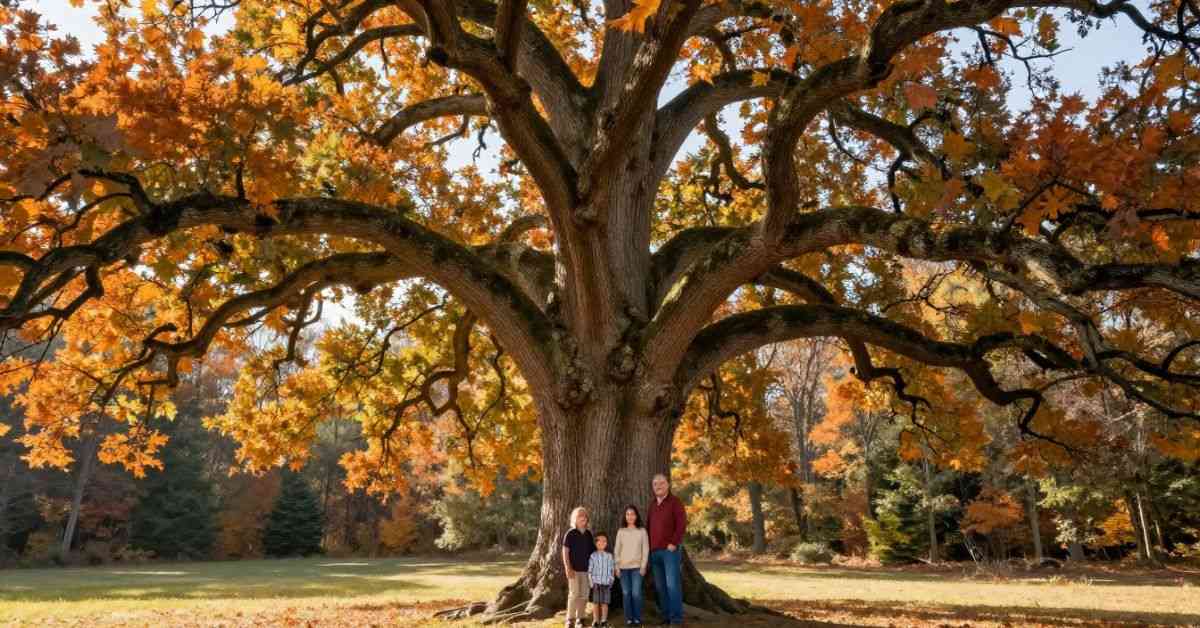
Have you ever stood next to a tree so big that it made you feel tiny? Imagine finding trees that are hundreds of years old, taller than buildings, and wider than cars. These special trees exist right here in central Ohio, and they’re waiting for you to discover them.
Champion trees near Lewis Center Ohio represent some of the most magnificent natural wonders in the entire state. These aren’t just any trees – they’re the biggest, tallest, or oldest of their species, officially recognized and protected for everyone to enjoy. Whether you’re a nature lover, a curious student, or a family looking for outdoor adventures, these remarkable giants offer something truly special.
In this guide, you’ll learn everything about these amazing trees. We’ll cover where to find them, why they matter, and how you can visit them safely. You’ll also discover fun facts that will impress your friends and family. By the end of this article, you’ll understand why these trees are treasured by scientists, historians, and everyday people alike. Let’s explore the wonderful world of Ohio’s biggest and best trees together!
What Are Champion Trees and Why Do They Matter?
Champion trees are the superstars of the tree world. Just like sports have champions who are the best at what they do, the tree world has champions too. These are trees that have been officially measured and recognized as the largest of their species in a particular area.
But how do experts decide which trees deserve the champion title? They use a special scoring system that looks at three main things:
- Circumference – How thick the trunk is (measured in inches)
- Height – How tall the tree grows (measured in feet)
- Crown Spread – How wide the branches reach out (measured in feet)
Scientists add these numbers together using a special formula. The tree with the highest score becomes the champion. This scoring system was created by American Forests, a conservation group that has been protecting trees since 1875.
Champion trees matter for several important reasons. First, they show us how big and healthy trees can grow when they have the right conditions. Second, they often carry important history – some have been alive for 200, 300, or even 500 years! Third, they provide homes for wildlife, clean our air, and make our communities more beautiful.
The History of Big Trees in Central Ohio
Central Ohio has a fascinating tree history that goes back thousands of years. Long before European settlers arrived, this land was covered with massive forests. Native American tribes, including the Wyandot and Delaware peoples, lived among these ancient giants and used them for shelter, medicine, and spiritual purposes.
When settlers came to Ohio in the late 1700s and early 1800s, they found trees unlike anything they had seen before. Historical records describe oak trees with trunks 10 feet wide and sycamores so large that entire families could live inside their hollow centers. One famous story tells of a sycamore near Marietta, Ohio, that could fit 15 people standing inside its trunk!
Sadly, most of these original forest giants were cut down during the 1800s and 1900s. Settlers needed wood for homes, barns, and fuel. By 1900, Ohio had lost about 90% of its original forests. The trees that survived this period are now among our most precious natural treasures.
The area around Delaware County, where Lewis Center is located, was particularly well-forested historically. The Olentangy River valley provided perfect growing conditions with its rich bottomland soil and regular water supply. Some of the champion trees near Lewis Center Ohio today are descendants of those original forests or even survivors from that era.
Conservation efforts began in the early 1900s when people realized how much forest had been lost. Today, thanks to these efforts, Ohio’s forests are slowly recovering. The state now has about 8 million acres of forest, and many exceptional specimens can be found throughout the region.
Top Species to Discover in the Lewis Center Region
The area surrounding Lewis Center is home to many impressive tree species. Each type has unique characteristics that make it special. Here are the most notable species you can find:
Ohio Buckeye – This is Ohio’s state tree, and it’s easy to see why people love it. The buckeye produces beautiful clusters of yellow flowers in spring and shiny brown nuts in fall. The nuts look like the eye of a deer (a buck), which is how the tree got its name. Some buckeyes in this region are over 100 years old.
White Oak – These massive trees can live for 400 years or more. White oaks produce acorns that wildlife love to eat. Their strong wood was historically used to build ships and barrels. Some specimens in Delaware County have trunk circumferences exceeding 15 feet.
Sycamore – American sycamores are easily recognized by their patchy bark that looks like camouflage. They typically grow near water and can reach heights of over 100 feet. The hollow trunks of old sycamores often serve as homes for owls, raccoons, and other wildlife.
Tulip Poplar – Despite its name, this tree isn’t actually a poplar – it’s related to magnolias. Tulip poplars grow very straight and tall, sometimes reaching 150 feet. Their unique tulip-shaped flowers bloom in late spring.
Black Walnut – These trees produce the delicious walnuts you might have eaten. Their wood is extremely valuable and is used to make fine furniture. A single large black walnut tree can be worth thousands of dollars.
Finding and documenting champion trees near Lewis Center Ohio involves searching through parks, nature preserves, and even private properties where these magnificent specimens grow.
Where to Find the Biggest Trees in Delaware County
If you want to see impressive trees in person, Delaware County offers several excellent locations. Here’s your guide to the best spots:
Highbanks Metro Park is perhaps the most accessible location for tree enthusiasts. This 1,200-acre park features a mature forest with excellent examples of oaks, maples, and hickories. The park’s “Big Meadows” trail passes through old-growth forest sections where you can see trees that are 150+ years old. Rangers can point you toward the largest specimens.
Alum Creek State Park covers over 8,600 acres and includes diverse habitats. The forested areas near the reservoir contain some impressive sycamores and cottonwoods. The hiking trails on the park’s south end are particularly good for tree viewing.
Preservation Parks of Delaware County manages several natural areas that protect significant trees. Their properties include forests that haven’t been logged for over a century, allowing trees to reach impressive sizes.
The Olentangy River corridor running through the region features riparian forests with large sycamores, silver maples, and willows. Many of these trees have grown undisturbed for generations because the flood-prone land wasn’t suitable for farming.
You might also discover remarkable specimens in unexpected places. Old farmsteads, cemeteries, and historic properties often have trees that were intentionally preserved. Some of the biggest trees are on private land, though you can sometimes spot them from public roads.
When visiting these locations, remember to stay on designated trails and never damage trees by carving them or removing bark. These natural treasures need our protection.
How Trees Get Their Champion Status
The process of naming a tree as a champion involves careful measurement and official documentation. Here’s how it works:
Anyone can nominate a tree for champion status. If you think you’ve found an exceptionally large tree, you can report it to the Ohio Department of Natural Resources (ODNR). They maintain the official Ohio Champion Tree Program.
Once a tree is nominated, trained measurers visit the site. They use specialized equipment to get accurate measurements. For circumference, they measure at 4.5 feet above the ground (called “breast height”). For height, they use laser rangefinders or clinometers. Crown spread is measured by finding the widest point of the branches.
The formula for calculating a tree’s score is:
Total Points = Circumference (inches) + Height (feet) + ¼ Crown Spread (feet)
For example, a tree with a 180-inch circumference, 90-foot height, and 80-foot crown spread would score: 180 + 90 + 20 = 290 points.
The tree with the highest score in each species becomes the state champion. Some trees also compete for national champion status through American Forests’ National Register of Champion Trees.
Getting a tree officially recognized as one of the champion trees near Lewis Center Ohio requires proper documentation, including photographs, GPS coordinates, and information about the tree’s location and health.
Trees can lose their champion status if they die, suffer storm damage, or if a larger tree is discovered. This is why the registry is updated every few years.
Benefits of Large Trees for Communities
Big trees do much more than just look impressive. They provide incredible benefits that affect our daily lives in ways you might not realize.
Air Quality Improvement – A single large tree can absorb 48 pounds of carbon dioxide per year and release enough oxygen for two people to breathe. The mature trees around Lewis Center help clean the air for the entire community.
Cooling Effect – Large trees provide shade that can lower surrounding temperatures by 10-15 degrees Fahrenheit. This natural air conditioning reduces energy costs and makes outdoor activities more comfortable during hot Ohio summers.
Property Values – Studies from the USDA Forest Service show that mature trees can increase property values by 10-20%. Homes near parks with impressive trees are particularly desirable.
Stormwater Management – Big trees absorb thousands of gallons of rainwater through their roots and leaves. This reduces flooding and helps filter water before it enters streams and rivers.
Wildlife Habitat – Large, mature trees provide food and shelter for hundreds of species. A single oak tree can support over 500 different types of caterpillars, which birds rely on to feed their young.
Mental Health – Research published by the National Institutes of Health shows that spending time around trees reduces stress, anxiety, and depression. The presence of large trees in a community contributes to better overall mental health.
Historical Connection – The biggest trees in our area have witnessed generations of history. Standing beneath them connects us to the past in a tangible way.
Ohio’s Remarkable Tree Statistics
Understanding tree champions becomes easier when you see the numbers. Here are two helpful tables with current data:
Notable Tree Species in Delaware County Area (2026 Data)
| Species | Record Height (ft) | Record Circumference (in) | Typical Lifespan (years) | Location Type |
|---|---|---|---|---|
| White Oak | 135 | 276 | 300-600 | Upland forests |
| Sycamore | 148 | 382 | 250-500 | Streamside |
| Tulip Poplar | 165 | 204 | 200-300 | Mixed forest |
| Ohio Buckeye | 85 | 156 | 80-150 | Varied |
| Black Walnut | 112 | 189 | 150-250 | Rich soil |
| Red Oak | 125 | 268 | 200-400 | Upland forests |
| Sugar Maple | 110 | 198 | 200-300 | Mixed forest |
These numbers show why protecting champion trees near Lewis Center Ohio is so important for our community’s health and environment.
How to Safely Visit and Photograph These Giants
Visiting remarkable trees can be an amazing experience, but it requires some planning and respect for nature. Here’s your complete guide to making the most of your tree adventures:
Plan Your Visit
- Check weather forecasts before heading out
- Spring and fall offer the best conditions for viewing and photography
- Weekday mornings are typically less crowded at popular parks
- Download park maps or take screenshots since cell service can be spotty in forested areas
What to Bring
- Comfortable walking shoes (trails can be muddy)
- Water and snacks
- Camera with wide-angle capability (regular phone cameras work fine)
- A measuring tape if you want to check tree sizes yourself
- Binoculars to look up into the canopy
- Insect repellent during warmer months
Photography Tips
- Include a person in your photos for scale – this shows how truly massive these trees are
- Early morning and late afternoon light creates the best photos
- Look up! The view through the canopy makes for stunning shots
- Take photos of interesting bark patterns, root systems, and any wildlife you spot
Respect the Trees
- Never carve initials or messages into bark – this damages the tree and invites disease
- Stay on trails to avoid compacting soil around roots
- Don’t climb on old trees, as their branches may be fragile
- Never remove bark, leaves, or seeds without permission
Safety Considerations
- Avoid visiting during or after storms when branches may fall
- Watch for poison ivy, which is common in Ohio forests
- Let someone know where you’re going and when you expect to return
- Be aware of your surroundings and wildlife
If you discover what you believe might be a potential champion, you can report it through the Ohio DNR website for official verification.
Conservation Efforts Protecting These Natural Treasures
Protecting big trees requires ongoing effort from many different groups. Here’s what’s happening to ensure future generations can enjoy these magnificent specimens:
Government Protection – The Ohio Department of Natural Resources works with local agencies to identify and monitor exceptional trees. State parks and nature preserves provide legal protection for trees within their boundaries. Some trees receive additional protection as part of designated natural areas.
Private Land Conservation – Many impressive trees grow on private property. Land trusts like the Preservation Parks of Delaware County work with landowners to establish conservation easements. These legal agreements permanently protect land and trees from development.
Community Tree Programs – Local communities plant and care for trees through volunteer programs. The City of Columbus and surrounding municipalities have urban forestry departments dedicated to tree maintenance and planting.
University Research – Ohio State University researchers study tree health, growth patterns, and climate adaptation. Their work helps us understand how to better protect trees as environmental conditions change. You can learn more about tree science through the Ohio State Extension program.
Climate Considerations – As temperatures change, some tree species face new challenges from pests, diseases, and weather stress. Conservationists are monitoring how the biggest trees cope with these changes and developing strategies to help them survive.
Citizen Science – Regular people play an important role in conservation. Programs like iNaturalist allow anyone to document tree sightings, helping scientists track populations and discover new specimens.
The ongoing protection of champion trees near Lewis Center Ohio depends on everyone doing their part.
Fun Activities for Families and School Groups
Learning about trees doesn’t have to be boring! Here are engaging activities that families, students, and groups can enjoy:
Tree Scavenger Hunt
Create a checklist of different tree species to find. Include items like:
- A tree with peeling bark (sycamore)
- A tree with lobed leaves (oak)
- A tree with compound leaves (walnut)
- A tree wider than three arm spans
- A tree with visible wildlife (bird nests, squirrels)
Measurement Challenge
Bring a tape measure and try to find the biggest tree in each park you visit. Calculate approximate circumference and compare to official records. This activity teaches math skills while connecting kids with nature.
Leaf Collection and Identification
Collect fallen leaves from different species (never pick leaves from living trees). Use field guides or apps like Seek by iNaturalist to identify what you’ve found. Press the leaves in books to preserve them.
Photography Project
Challenge kids to take photos that show trees in creative ways. Categories might include:
- Most interesting bark
- Tallest tree they can find
- Best “looking up” shot
- Tree with the best fall colors
Historical Research
Have students research what the land looked like when their tree was young. A 200-year-old tree was a seedling in the early 1800s. What was happening in Ohio then? This connects science with history and social studies.
Junior Naturalist Programs
Many parks offer structured programs for young people. Check with Highbanks Metro Park and other facilities for scheduled events. These programs often include tree-focused activities led by trained naturalists.
These activities help build appreciation for champion trees near Lewis Center Ohio and nature in general.
FAQs
What is the largest tree species in Ohio?
The American sycamore holds records for both height and circumference in Ohio, with some specimens exceeding 140 feet tall and 25 feet around.
Can I visit trees on private property?
You must get permission from landowners before entering private property. Many exceptional trees are visible from public roads or parks.
How old are the oldest trees in the Lewis Center area?
Some white oaks and sycamores in Delaware County are estimated to be 200-300 years old, though exact ages require core sampling.
What is the best time of year to see these trees?
Late spring offers beautiful new growth, while October provides stunning fall colors. Winter lets you see dramatic tree structures clearly.
How can I report a possible champion tree I’ve discovered?
Contact the Ohio Department of Natural Resources through their website or call your local ODNR district office to report potential champions.
Conclusion
The magnificent champion trees near Lewis Center Ohio offer incredible opportunities for outdoor adventure, education, and connection with nature. These living giants have survived for centuries, witnessed our region’s history, and continue to provide vital benefits to our communities every day.
Now that you understand what makes these trees special, where to find them, and how to enjoy them responsibly, it’s time to start your own exploration. Whether you’re planning a family outing to Highbanks Metro Park, organizing a school field trip, or simply taking a nature walk through your neighborhood, you’ll see trees in a whole new way.
Remember that protecting these natural treasures is everyone’s responsibility. By staying on trails, respecting private property, and teaching others about tree conservation, you help ensure future generations can enjoy these magnificent specimens.
Your Call to Action: Visit one of the locations mentioned in this guide within the next month. Take photos, share your experience with friends and family, and consider reporting any exceptionally large trees you discover. Together, we can celebrate and protect Ohio’s remarkable tree heritage for many years to come.